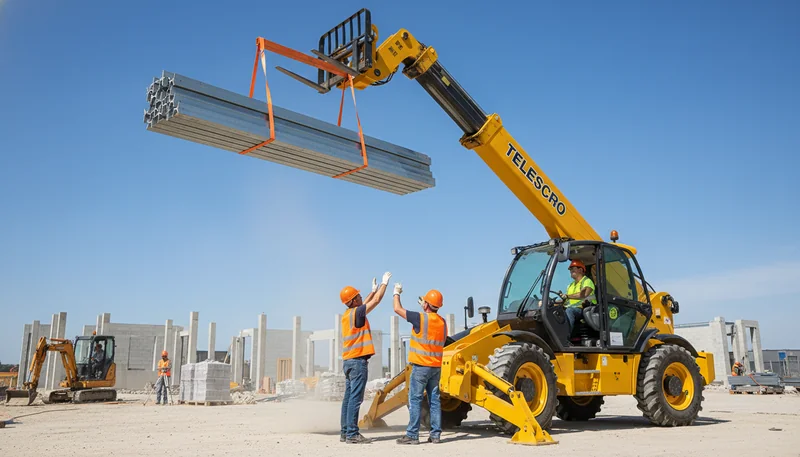
Some machines earn their place on site because they can handle more than one problem. A telehandler is one of them. It can lift, reach, carry, load, and place materials in areas where a standard forklift, loader, or crane may not be the easiest fit.
For builders, civil crews, warehouse teams, and infrastructure workers, telehandler hire is often less about one lift and more about keeping materials moving through the day. When the right machine is matched to the job, it can reduce waiting time, cut down on double handling, and make awkward site movement far easier to manage.
Reach Changes How Materials Move
The main advantage of a telehandler is reach. It can lift materials forward and upward, which makes it useful when loads need to move across barriers, onto higher levels, over uneven ground, or into tight working areas.
On a building site, that might mean placing pallets closer to where trades need them. On a civil project, it may involve moving materials across rough ground. In a yard, it can help stack, unload, or reposition bulky items without needing several machines to do the same task.
Reach also changes how crews plan storage. Materials do not always need to sit right beside the work area. If the telehandler can place them safely, the site can stay less crowded and more organised.
It Reduces the “Move It Again Later” Problem
Double handling is one of the quiet ways sites lose time. A delivery arrives and gets dropped in the first available spot. Later, another crew has to move it again. Then it gets moved a third time because it is blocking access.
A telehandler can reduce that waste when it is used with a clear material plan. Instead of dropping loads wherever there is space, crews can place them closer to the next stage of work.
That matters for items such as:
- Pallets of bricks or blocks
- Steel, timber, or framing materials
- Pipes and drainage supplies
- Packaged building materials
- Equipment or temporary site gear
- Bulk items that are awkward to shift by hand
A machine that places materials properly the first time can save more labour than people expect.
Rough Ground Is Part of the Job
Many sites are not smooth, sealed, or easy to move through. Mud, gravel, uneven pads, ramps, unfinished roads, and changing ground levels can make basic material handling harder.
A telehandler is often chosen because it can work across rougher ground than standard warehouse-style lifting equipment. That does not mean it can go anywhere without planning. Ground conditions still matter, especially after rain or when loads are heavy.
The operator needs to understand the surface, the load, and the safest travel path. A smart route through the site can prevent bogging, delays, and awkward repositioning. The machine may be versatile, but it still needs a sensible plan behind it.
Attachments Make the Machine More Useful
Telehandlers are not limited to one task. Different attachments can make them useful across several parts of a project. Forks may handle pallets and packaged loads. Buckets can help with loose materials. Jibs or lifting attachments may suit specific handling tasks where approved and planned correctly.
This flexibility is one reason telehandlers are popular on mixed sites. A crew may need to unload deliveries in the morning, move materials at midday, and support another trade later in the day.
Before hiring, it helps to think through the actual tasks. The question is not only “How high can it lift?” It is also “What will it carry, how often will it move, and what attachment will make that safer or quicker?”
Operator Skill Still Matters
A telehandler can look straightforward from the outside, but good operation takes judgement. Loads can affect balance. Reach changes stability. Poor ground can shift the feel of the machine. Busy work zones need careful movement.
An experienced operator knows when to slow down, change approach, ask for a spotter, or avoid a travel path that looks risky. That skill becomes especially important when working around trades, trucks, scaffolding, temporary fencing, or public-facing areas.
The machine may solve several site problems, but the operator decides how safely and smoothly those jobs happen.
Better Planning Means Fewer Idle Crews
Telehandlers are most valuable when they are part of the day’s workflow, not called in only when something is already stuck. If deliveries, storage areas, lift points, and work zones are planned properly, the machine can keep several crews moving.
A few simple planning questions can help:
- Where will deliveries be unloaded?
- Which materials need to move first?
- Is there a clear travel path?
- Will the ground hold up through the day?
- Does the operator need a spotter in busy areas?
When those answers are clear, the telehandler becomes more than hired equipment. It becomes a link between delivery, storage, and actual work.
Conclusion
Telehandlers solve more than lifting problems because they deal with the practical movement issues that slow sites down. They reach where other machines may struggle, reduce double handling, work across varied ground, and adapt to different tasks with the right attachment.
The best results come from matching the machine, operator, attachment, and site plan to the work ahead. When that happens, material handling feels less like a daily headache and more like part of a well-run site.


